
Egypt Independent
Wadi el-Hitan (Valley of Whales) is a desert in Fayoum full of dramatic landscapes where, from time to time, scientists have been surprised to unearth remarkable collections of various eocene vertebrate species, particularly whales, which caused UNESCO to designate it as a World
Heritage Site in 2005.
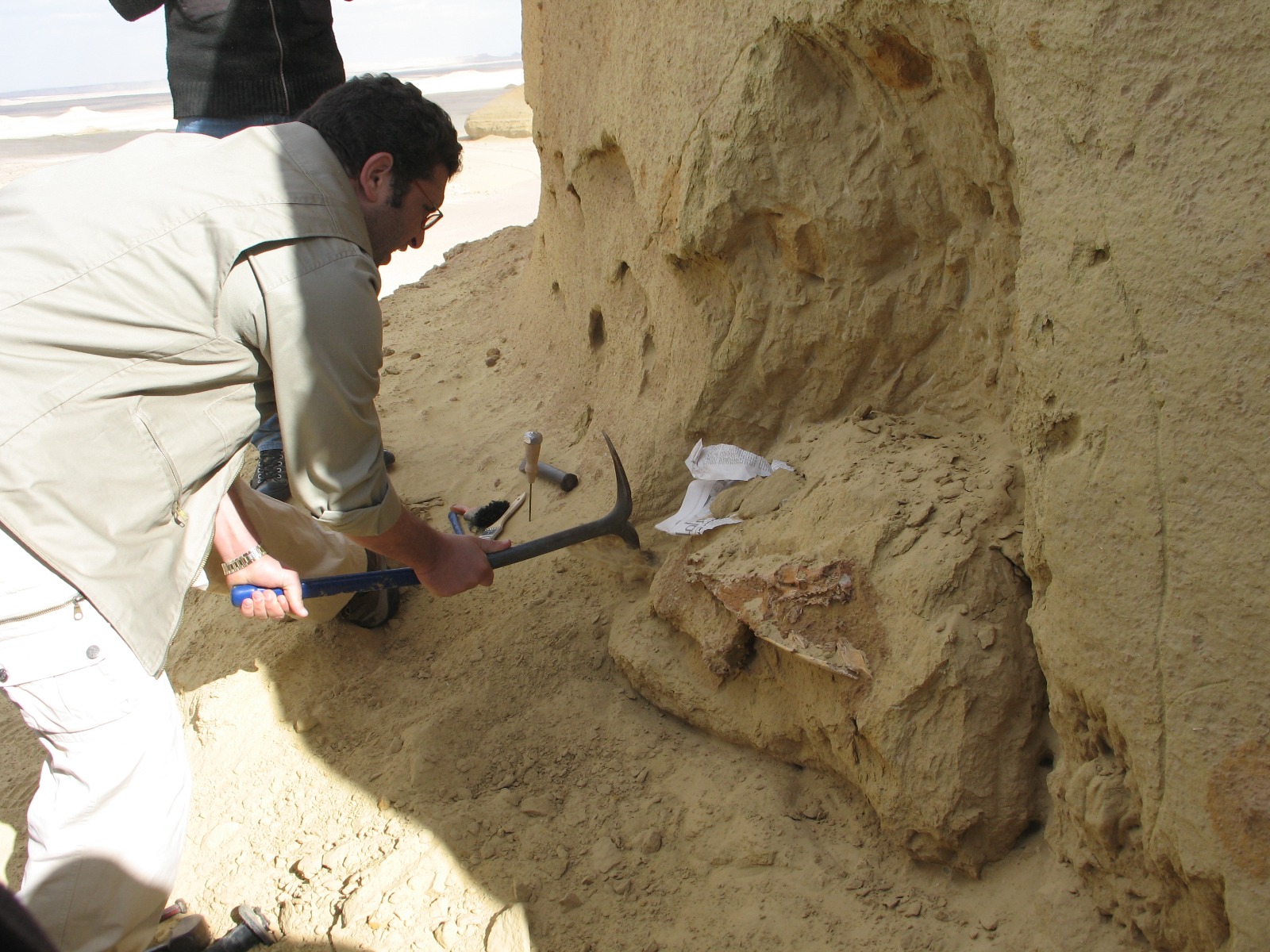
Recently, a group of Egyptian paleontologists discovered the fossilized remains of a 2-meter-long catfish that lived roughly 37 million years ago. The team, lead by 26-year-old Sanaa el-Sayed, are pursuing a Master's in vertebrate paleontology at Mansoura University. Their discovery is the first of its kind for an all-Egyptian team, as well as being a first for a team led by an Egyptian woman.
The specimen was collected during a field exploration for student training by the Mansoura University Vertebrate Paleontology Center (MUVP) in collaboration with the Egyptian Environmental Affairs Agency (EEAA), based on the mutual memorandum of understanding between the two institutions.
The study said this newly-found fossil is remarkably well-preserved and consists of an incomplete neurocranium, with the entire left side preserved, as well as a partial right dentary, left suspensorium, two opercles, left pectoral girdle and spine, nuchal plates, first and second dorsal spines, Weberian apparatus and a disassociated series of vertebrae belonging to the same individual.