
National Geographic
An 18-million-year-old jawbone discovered in Egypt challenges the long-held view that East Africa was the cradle of our modern ape ancestors.
Most early ape fossils paleontologists have
unearthed come from East Africa,
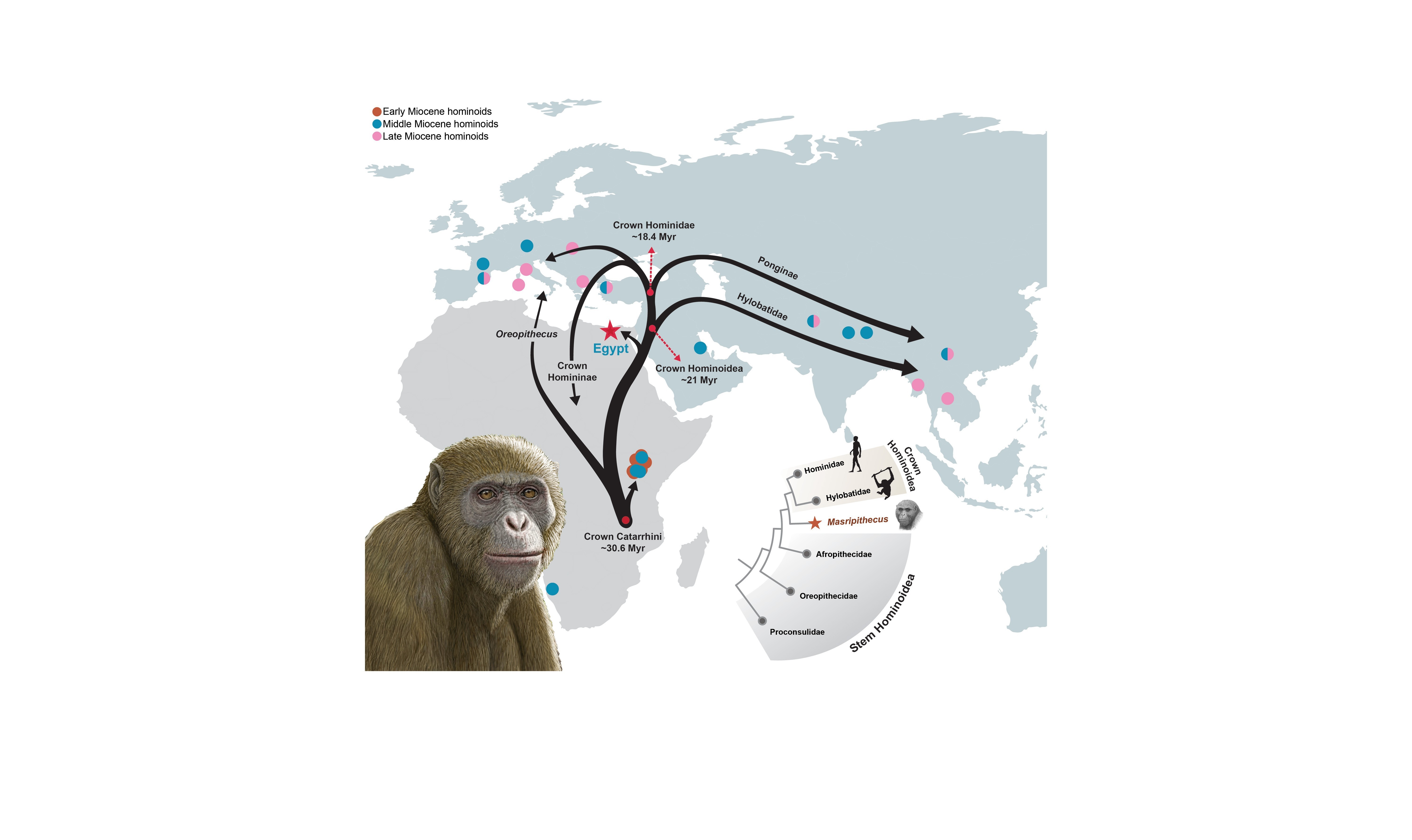
close to the forests where some chimpanzees and gorillas survive today. Based on the fossil record, we know that 14 to 16 million years ago, during the middle Miocene Epoch, ancient ancestors of these apes spread from Africa into Eurasia.
Now, researchers in Egypt have found the first fossilized ape from North Africa–or at least, part of its lower jaw and some of its teeth. The fossils are estimated to be 17 to 18 million years old, during the early Miocene, predating the dispersal into Eurasia. The scientists say the newly discovered ape, named Masripithecus moghraensis, is similar to what the ancestor of all hominoids—the group that includes gibbons, orangutans, gorillas, chimpanzees, bonobos, and humans—is predicted to have looked like.