
National Geographic
Some were the size of a dog. Others were as large as polar bears. A newly-discovered fossil of the ferocious hyaenodont is helping scientists understand a little bit more about the mysterious
creatures.
Long before wolves or big cats, large hyaenodonts prowled the landscape.
Despite their name, the carnivores were not hyenas. Hyaenodonts were an ancient group of four-legged flesh-eaters that spread from ancient Europe through Africa, Asia, and North America between 56 and about 5 million years ago.
Most were small, comparable to a medium-sized dog, but the largest weighed more than 3,000 pounds and were larger than polar bears. These large species were the apex predators when the ancestors of cats and dogs were still small creatures.
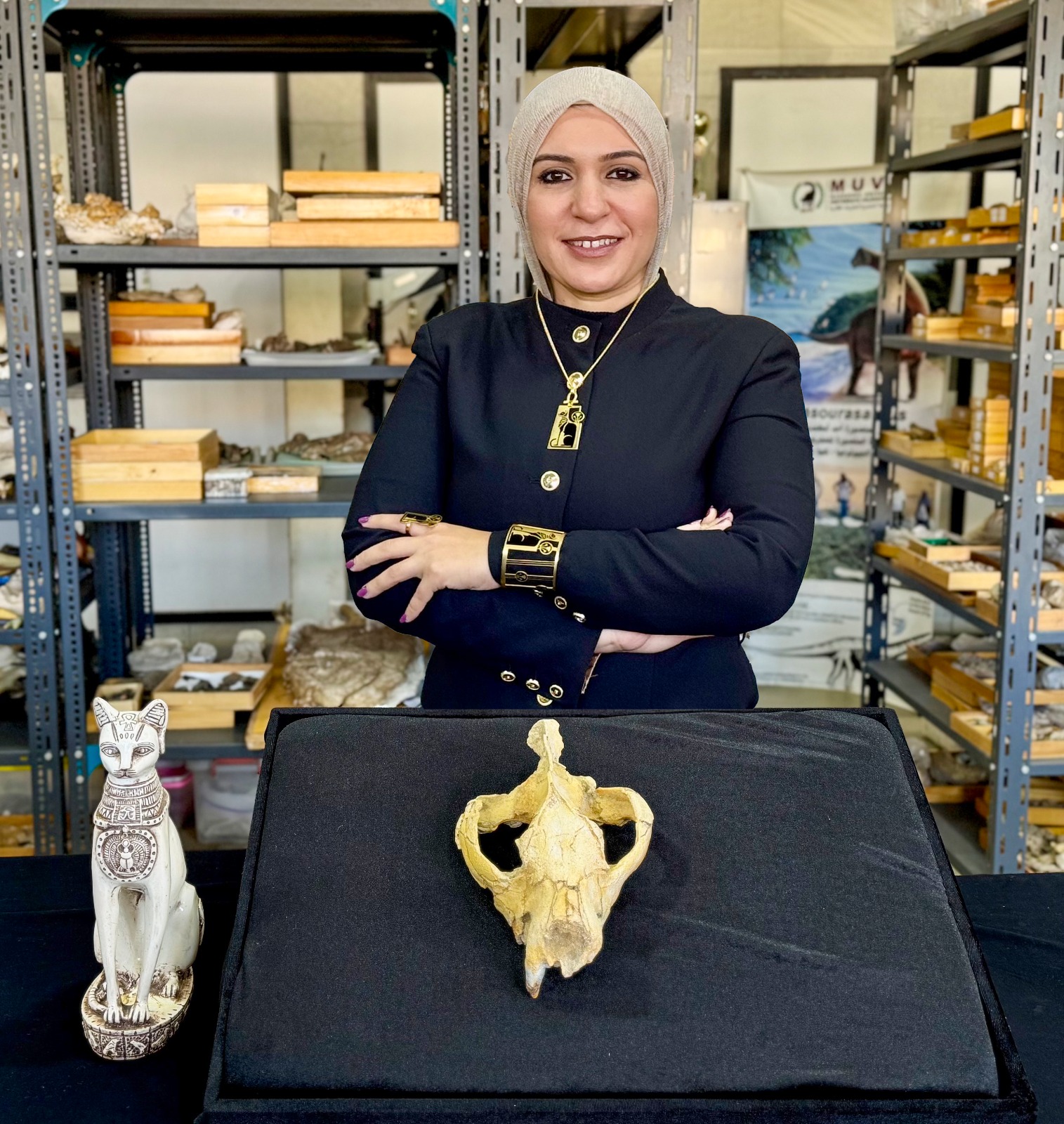
A newly-described fossil skull has given paleontologists their best look yet at a hyaenodont with a meat-cleaving bite.
(Can DNA solve the mystery of Europe’s pointy skulls?)
Found in the 30 million-year-old rock of Egypt’s Fayum Basin, the prehistoric skull represents a new genus of hyaenodont.
“It was upside down when one of my colleagues noticed some large teeth sticking out of the ground,” says lead study author and Mansoura University paleontologist Shorouq Al-Ashqar.